
Any parent who has watched their child melt down in a dental chair knows the problem. The needle comes out, the drill starts whining, and whatever trust was built up in the waiting room disappears. For a lot of kids, one bad cavity appointment sets the tone for a lifetime of dental anxiety. At All Smiles Dental in Burley, Dr. Spencer Rice uses air abrasion and WaterLase laser dentistry to treat many pediatric cavities without shots or traditional drills, and the difference in how kids respond is something parents talk about in the reviews long after the appointment.
Here’s what these technologies actually are, which cavities qualify for the no-shot approach, and why this matters for kids who’ve already had a rough experience in the chair.
What Air Abrasion Actually Is
Air abrasion uses a fine stream of aluminum oxide particles propelled by pressurized air to gently remove decayed tooth material. It works the same way sandblasting works on a much smaller and more controlled scale. Instead of a spinning drill cutting through tooth structure with heat and vibration, air abrasion wears away the decay with a precise stream of tiny particles.
The experience is completely different from a traditional drill. There’s no noise of a motor, no vibration running through the tooth and into the jaw, and no heat generation that requires water cooling spraying into the mouth. What the child feels is a small puff of air and a slight sensation of particles hitting the tooth. Most kids describe it as tickling rather than hurting.
Because air abrasion generates no heat or vibration, it usually doesn’t trigger the nerve response that requires anesthesia. That’s the key reason injections can often be skipped for appropriate cavities.
How WaterLase Laser Dentistry Fits In
The WaterLase system uses a combination of laser energy and a fine water spray to remove decay and prepare the tooth for a filling. The laser energizes water droplets, which in turn remove small amounts of tooth structure with remarkable precision.
The laser-plus-water approach has several qualities that matter for children:
- No drill noise, which eliminates one of the biggest triggers of dental anxiety in kids
- No vibration transmitted through the tooth
- A cooler procedure that rarely requires anesthesia for small to moderate cavities
- Antibacterial effect from the laser energy, which may reduce the risk of recurrent decay around the restoration
- Precise removal of only the compromised tooth structure, preserving more healthy enamel and dentin
WaterLase is used across dentistry for a range of procedures, and its role in pediatric cavity treatment is one of the applications where the benefits show up most clearly for patients. The Academy of Laser Dentistry has published guidance on laser use in pediatric care, and the technology has been in clinical use for more than two decades with an established safety profile.
Which Cavities Qualify for the No-Shot Approach
Not every cavity can be treated without anesthesia. The technique works best for specific situations, and honesty about when it applies is part of giving parents accurate expectations.
Good candidates for air abrasion or WaterLase treatment without injections:
- Small to moderate cavities caught early
- Decay in the outer enamel and shallow dentin layers
- Cavities on the chewing surfaces or smooth surfaces of the tooth
- First cavities in kids with no significant dental anxiety history
- Teeth where the pulp is still well protected by healthy tooth structure
Situations that typically still require traditional techniques and often anesthesia:
- Deep cavities that extend close to the nerve
- Cavities between teeth that require significant shaping of the contact area
- Extensive decay that requires a crown or pulp therapy
- Teeth with existing large fillings that need replacement
- Children with significant anxiety who benefit from additional comfort measures regardless
The honest answer for many kids is that some of their cavities qualify for the gentler approach and some don’t. A smaller cavity caught at a routine checkup is more likely to be treatable without shots than a large cavity that’s been there long enough to cause pain.
This is part of why regular dental visits matter for kids. Catching decay early isn’t just about preventing pain. It expands the treatment options available and often eliminates the need for injections entirely.
What the Appointment Looks Like From a Child’s Perspective
A typical pediatric cavity appointment using air abrasion or WaterLase at All Smiles Dental moves through several steps, and understanding the flow helps parents prepare their child for what’s coming.
The appointment usually starts with a cleaning and a conversation about what the dentist is going to do. Dr. Rice and the team use language kids can understand and show them the instruments before using them in the mouth. Kids who know what’s coming generally handle procedures better than kids who are surprised by each new step.
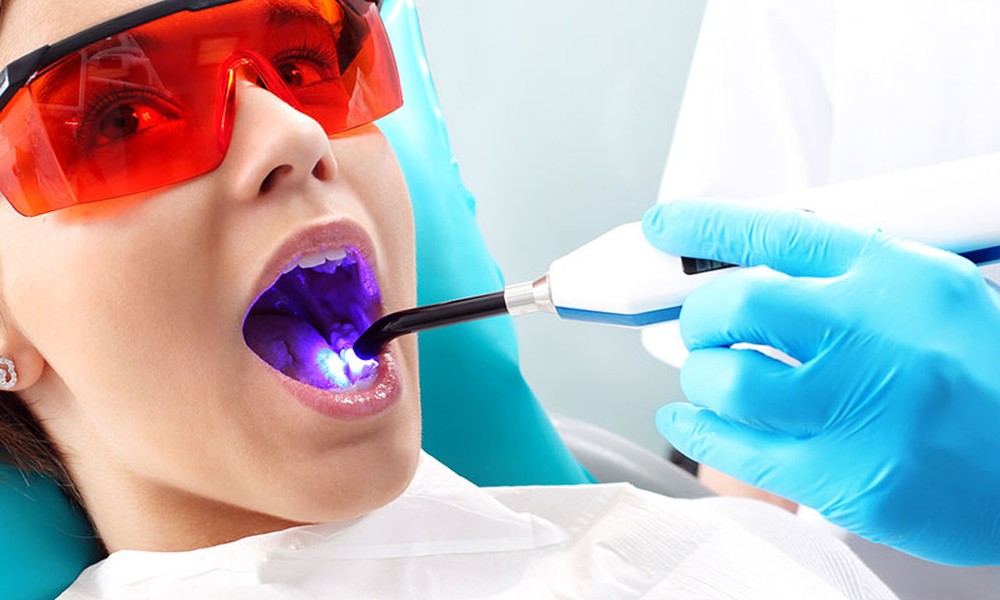
The decay removal itself takes five to fifteen minutes depending on the size of the cavity. The child wears protective eyewear, feels a slight air or water spray on the tooth, and hears a gentle hissing sound rather than a drill. No numbness, no facial droop afterward, no biting a numb lip on the way home.
After decay removal, the tooth is cleaned, prepared with a bonding agent, and filled with tooth-colored composite material. The composite is shaped and hardened with a curing light, adjusted to the bite, and polished. The whole appointment typically runs 30 to 45 minutes from start to finish.
Kids walk out with a normal mouth, no drool from anesthesia, and no stories to tell their siblings about how bad the dentist was.
Why This Matters for Kids With Past Dental Trauma
Dental anxiety in children is often created rather than innate. A bad experience at age five can drive avoidance behavior that lasts into adulthood. Parents who are themselves anxious about dental work often pass that anxiety on, sometimes without meaning to.
For kids who have already had a negative experience, the stakes for the next appointment are higher. The child arrives expecting something bad. If the appointment goes well, the memory starts to reshape. If it goes poorly, the anxiety gets reinforced and compounded.
Air abrasion and WaterLase give a practical alternative for these kids. Eliminating the drill sound and the injection removes the two biggest triggers of pediatric dental anxiety. A child who expected the worst and had an actually tolerable appointment rebuilds trust quickly.
Parents bringing kids with prior bad experiences should mention it when scheduling. Dr. Rice and the team adjust the approach, take extra time, and often use nitrous oxide or other comfort techniques alongside the gentler cavity treatment when it’s appropriate.
Getting Kids Started on the Right Foot
The best pediatric dental experience is one where the child never develops a fear of the chair in the first place. Catching cavities early, using technology that avoids shots and drills when possible, and building a relationship with a dentist who understands kids all contribute to that outcome.
If your child has a cavity that needs treatment, or if you’ve been putting off a dental visit because of past difficulty, contact All Smiles Dental in Burley to schedule an appointment with Dr. Rice. The appointment your child leaves talking about doesn’t have to be the bad kind.
